
The cheapest transaction is not always the best transaction. In DeFi, a swap that saves a few dollars in gas can still be expensive if it routes through a poorly understood contract, creates an unwanted token approval, or leaves a user exposed to a bridge failure. That is the counterintuitive starting point for anyone considering a Rabby extension download: gas optimization is not simply about paying less. It is about reducing the total cost of an action while preserving execution quality, wallet security, and control over what the transaction actually does.
For US-based DeFi users, this distinction matters because Ethereum and its compatible networks offer different fee markets, liquidity conditions, confirmation speeds, and risk profiles. A wallet that supports Ethereum and EVM chains can make those choices easier to inspect, but it cannot eliminate the underlying trade-offs. The useful mental model is a three-part budget: transaction fee, execution risk, and operational complexity. A decision that looks efficient on the first line may be poor once the other two are included.
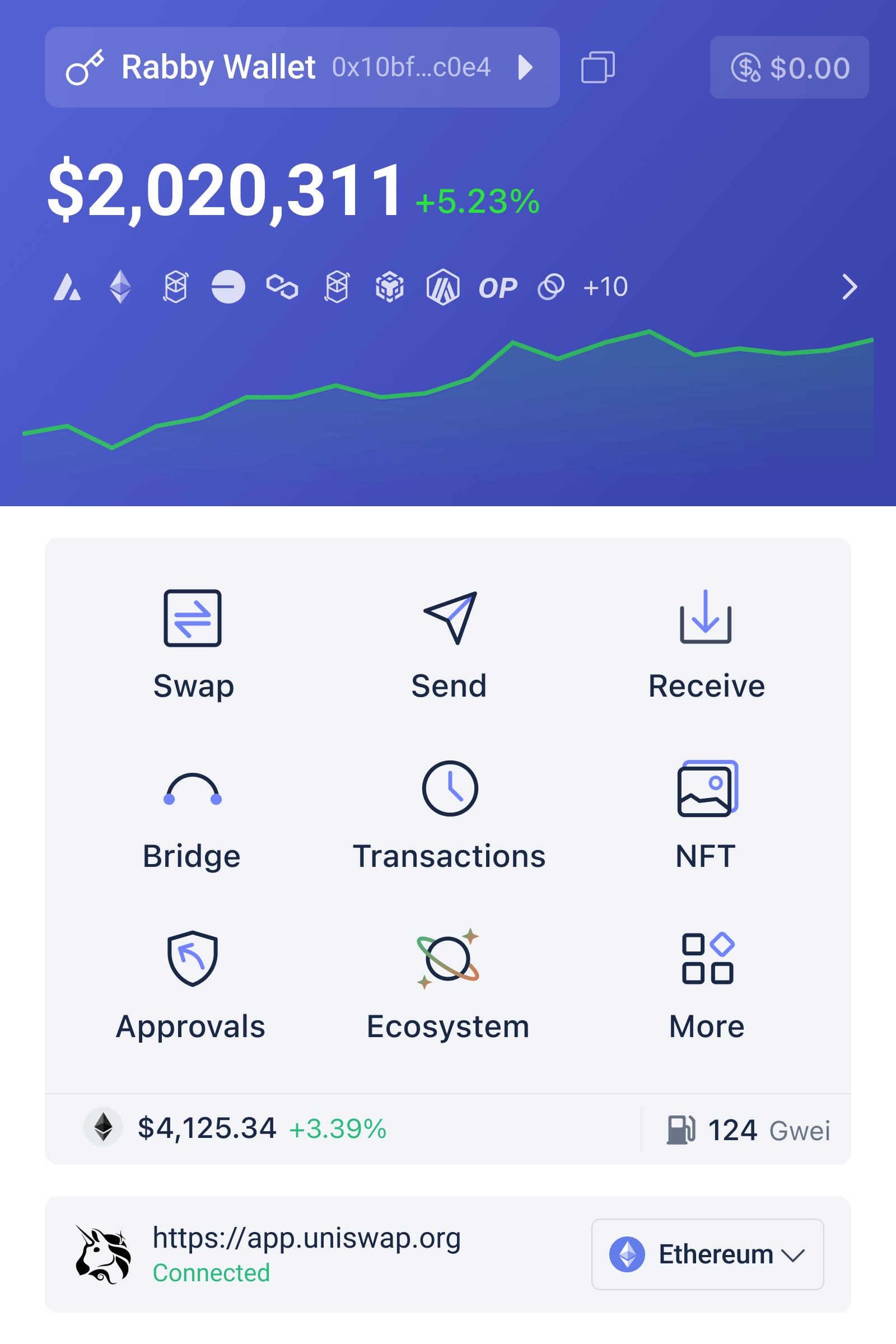
What gas optimization actually changes
Gas is the computational resource used to process an Ethereum transaction. Users pay for a quantity of gas multiplied by the network’s prevailing fee conditions. A simple transfer generally requires less computation than a multi-step decentralized exchange transaction, while a swap involving approvals, permit signatures, wrapping, routing, and settlement can require considerably more. The wallet does not set all of these costs; it estimates the work requested by the transaction and presents a fee based on network conditions.
This creates an important distinction between gas price and gas usage. Gas price reflects how much demand exists for block space at a given moment. Gas usage reflects how much computation the transaction requests. Waiting for a quieter period can sometimes lower the first variable, but it will not necessarily reduce the second. Conversely, a more efficient contract interaction may use less gas without changing the network’s fee market. A careful user therefore asks two questions: is this transaction structurally complex, and is the network currently congested?
Wallet-based optimization is most useful when it improves visibility before signing. During a legitimate transaction review, users should check the selected network, the destination contract, the token being spent, the expected output, and whether an approval is being requested. A lower estimated fee is not a security guarantee. It is only one part of the transaction forecast. If the transaction preview is unclear, the correct response is to investigate rather than to sign quickly.
When preparing a rabby wallet installation, download the extension only from a source you can independently verify and confirm that the browser extension is the expected product before importing or creating an account. Never enter a recovery phrase into a website, chat window, or support form. A browser wallet is a signing interface and key-management tool, not a substitute for checking the application that requested the signature.
Why cross-chain swaps are more than ordinary swaps
A same-chain swap generally involves exchanging one asset for another within a single network. A cross-chain swap adds a coordination problem: the asset leaves one domain of execution and an equivalent asset, message, or settlement claim must appear on another. Depending on the design, this may involve a bridge, a liquidity network, a canonical token representation, or an intent-based system in which a third party fulfills the user’s requested outcome.
The extra machinery changes the risk surface. A user may approve a token on the source chain, sign a swap instruction, interact with a bridge contract, and later receive an asset on the destination chain. Each step can have different permissions and failure modes. A destination token may have the same ticker as a familiar asset while representing a different contract. A route may be economically attractive because it uses thin liquidity, but thin liquidity can increase price impact and make the final amount less predictable.
Rabby’s value in this setting is best understood as transaction context rather than magic protection. A wallet can help present warnings, estimated outcomes, and contract information in one review flow. That can reduce avoidable mistakes, particularly when a user is moving between Ethereum and other EVM-compatible chains. Yet wallet warnings are not omniscient. New contracts, manipulated interfaces, malicious approvals, and compromised front ends can still produce confusing or harmful requests.
Cross-chain execution also introduces timing risk. The source transaction may confirm while the destination action remains pending. Network congestion, liquidity availability, relayer behavior, or a failed destination call can affect the result. Users should avoid treating a successful source-chain confirmation as proof that the entire cross-chain operation has completed. Completion should be verified on the destination network, using the correct asset contract and transaction record.
A practical framework for reducing cost without weakening security
Start by separating necessity from convenience. If the transaction is time-sensitive, the cost of waiting may exceed the expected fee savings. If it is a routine rebalance, waiting for better network conditions can be rational. The best time to optimize is often before the user has committed to a complex route. Compare the expected output after gas, price impact, and any bridge or service charge, rather than comparing the headline fee alone.
Next, examine approvals. An approval gives a contract permission to spend a token up to a specified amount. Unlimited approvals may reduce the need for repeated approval transactions, but they expand the potential damage if the approved contract is later exploited or used through a malicious interface. Smaller or exact approvals can increase transaction count and sometimes increase gas, yet they may improve containment. This is a classic risk-management trade-off: operational efficiency versus permission scope.
Then review the route as a sequence, not as a single button. Identify the source network, destination network, input asset, output asset, intermediary protocols, minimum received amount, deadline, and the account that will receive the result. Slippage is not a harmless technical setting. A high tolerance can allow execution through a materially worse price, while a low tolerance can cause a transaction to fail. The appropriate value depends on liquidity and volatility; there is no universal safe percentage.
Hardware signing can reduce exposure of private keys to a browser environment, but it does not make a malicious transaction safe. The hardware device may protect the key while the user still approves the wrong contract or amount. For larger balances, consider separating daily activity from long-term holdings, using a dedicated wallet for experimentation, and testing an unfamiliar route with a small amount. These measures do not remove smart-contract or bridge risk, but they can limit the size of a mistake.
A useful reusable heuristic is “cost, control, confirmation.” Cost asks what the transaction consumes in fees, spread, and slippage. Control asks what permissions and contracts the user is granting access to. Confirmation asks how the final result will be verified on both chains. If any one of these is unclear, apparent gas efficiency should not be the deciding factor.
Where optimization breaks down
Fee estimates are forecasts, not guarantees. The transaction may use more or less gas than predicted, the network fee may change before inclusion, or a replacement transaction may be needed if the first becomes stuck. A failed transaction can still consume gas because the network processed the attempted computation even though the intended state change did not complete. This is why repeated retries can turn a small routing problem into a meaningful loss.
There is also a boundary between wallet-level optimization and protocol-level risk. A wallet can help a user inspect a request, but it cannot guarantee that a bridge will remain solvent, that a token issuer will honor a representation, or that a decentralized exchange’s code is free from vulnerabilities. The more chains and intermediaries a route uses, the more assumptions the user is making. Convenience generally increases with abstraction; so can the difficulty of locating the failure point.
The recent positioning of Rabby as a wallet for Ethereum and EVM chains is relevant to this broader direction: users increasingly expect one interface to manage activity across several networks. If that trend continues, the important product question will not be only whether a wallet can initiate a cross-chain swap. It will be whether users can understand which entity controls each step, which asset they will receive, and what happens when the route does not settle cleanly.
For now, the strongest signal to watch is transparency. Better transaction simulations, clearer approval boundaries, explicit destination-chain confirmation, and understandable failure messages could reduce real-world loss more effectively than a marginal reduction in gas. If future wallet tooling makes those details easier to compare, users may optimize for risk-adjusted execution rather than for the lowest displayed fee.
FAQ: Rabby installation, gas, and cross-chain use
Does installing the Rabby browser extension automatically reduce gas fees?
No. The extension can help users inspect transactions and compare the practical consequences of an action, but gas costs are determined by the requested computation and network conditions. Savings may come from choosing a suitable network, avoiding unnecessary transactions, selecting an efficient route, or waiting for lower congestion. Those choices still require user judgment.
Are cross-chain swaps safer than using a separate bridge and decentralized exchange?
Not automatically. A unified swap interface may simplify the workflow and reduce manual steps, but the underlying route can still depend on bridges, liquidity providers, relayers, or smart contracts. Fewer visible clicks do not necessarily mean fewer technical assumptions. Review the asset, destination chain, permissions, expected output, and completion status.
Should I approve an unlimited token allowance to save gas?
Only after weighing the convenience against the expanded permission. An unlimited allowance can avoid future approval transactions, but a compromised or malicious contract could potentially spend more of the approved token. For unfamiliar protocols or meaningful balances, a limited approval and periodic allowance review may be the more disciplined choice.
What is the safest first step before trying a new cross-chain route?
Verify the wallet source and network, then use a small test amount. Read the transaction preview, confirm the destination token contract, record the expected recipient address, and wait for destination-chain confirmation. If the route requests an unexpected signature, asks for a recovery phrase, or presents an implausible output, stop before signing.
Gas optimization is therefore best treated as an engineering and security exercise, not a race to the smallest number on a fee estimate. A well-managed Rabby workflow can make Ethereum and EVM activity easier to inspect, but the final safeguard remains disciplined verification. Spend less when the opportunity is sound, limit permissions when the route is uncertain, and confirm the result on the chain where the value is supposed to arrive.